1. Project Overview
This is an SEO-optimized collection page written for Stride Supply, a DTC athletic footwear brand. Category pages are among the highest-value SEO assets in e-Commerce — they capture broad, high-volume search traffic and funnel shoppers toward the right products. The goal of this piece was to rank for a competitive head keyword, support internal linking across product subcategories, and help shoppers self-select into the right shoe type — reducing returns and increasing purchase confidence.
2. SEO Brief
| Element | Details |
|---|---|
| Primary Keyword | Women’s running shoes |
| Monthly Search Volume | 40,500 searches/month |
| Keyword Difficulty | High |
| Secondary Keywords | Best running shoes for women / Women’s road running shoes / Cushioned running shoes for women / Running shoes for flat feet women / Lightweight women’s running shoes |
| Search Intent | Commercial — shopper is actively looking to buy but may need guidance choosing the right shoe for their specific needs, terrain, or gait |
| Funnel Stage | Middle of Funnel — Consideration |
| Target Audience | Women 20–50 at varying experience levels, from beginner runners to high-mileage athletes. Different needs based on terrain, gait, and training goals. |
| Business Goal | Drive traffic from a high-volume category keyword, reduce decision paralysis through educational copy, and increase click-through rates to individual product pages |
3. The Copy Itself
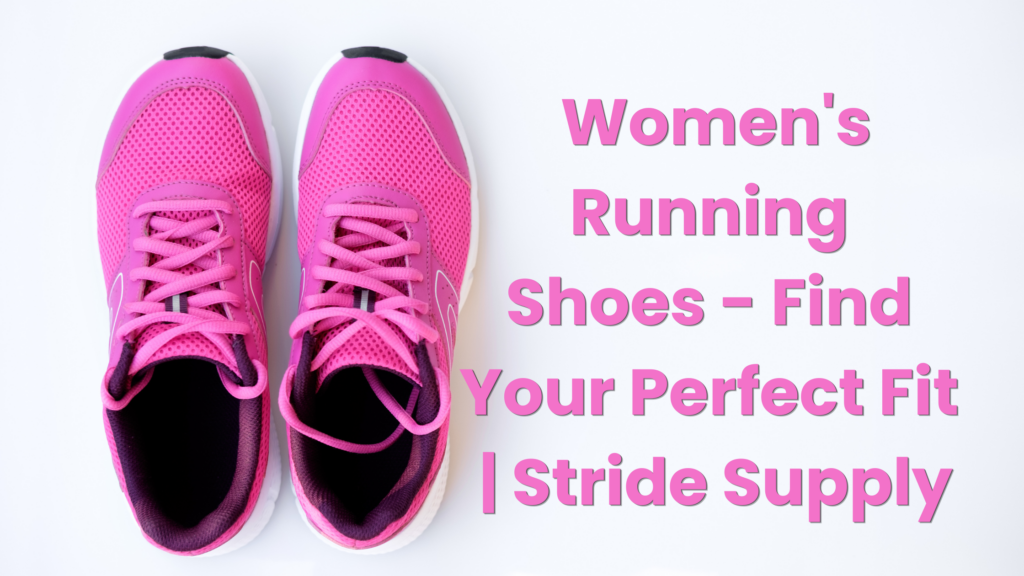
Women’s Running Shoes – Find Your Perfect Fit | Stride Supply
The first mile is a promise. The last mile is a victory. In between, there’s just you, your breath, and the rhythm of your feet on the ground. At Stride Supply, we believe that journey deserves the best partner possible. We create women’s running shoes that feel less like equipment and more like a natural extension of your body. The wrong pair can lead to pain and frustration, turning a joyful escape into a chore. But the right pair that feels like it was made for you can make every stride feel lighter and every run feel more powerful. We’re here to help you find your perfect fit, so you can forget about your feet and just enjoy the run. This is where your journey to happier miles begins.
Built for How You Run
Running isn’t a one-size-fits-all activity, and your shoes shouldn’t be either. Whether you’re a seasoned marathoner logging 50-mile weeks or a brand-new runner celebrating your first continuous mile, the shoe on your foot can be the difference between a feeling of flight and a feeling of friction.
Stride Supply women’s running shoes are carefully designed for the way a woman’s foot moves and the demands of your run. We focus on three core principles:
- Responsive Cushioning: It’s not just about being soft. It’s about placing durable, responsive foam precisely where you need it most—absorbing impact at the heel and providing an energetic pop at toe-off.
- Effortless Stability: Your foot has a natural, beautiful way of moving. Our shoes are designed to work with your gait, not against it, providing gentle guidance that prevents fatigue and injury without ever feeling restrictive.
- Lightweight Performance: We use advanced, breathable mesh uppers and lightweight materials that lock your foot in comfortably, manage heat, and feel like they disappear on your feet, never weighing you down.
Feeling a little overwhelmed by the options? You’re not alone. That’s why we created our [Running Shoe Finder Quiz]. In less than two minutes, we’ll ask you a few simple questions about your running habits and goals to provide a personalized recommendation. It’s the easiest way to find your perfect match.
Shop by Your Running Style
Your running path is unique. Find the shoe built to conquer it.
Women’s Road Running Shoes
For the Pavement Pounders, Treadmill Devotees, and Track Stars.
The rhythmic tap of your shoes on the asphalt is your meditation. The hum of the treadmill is your focus zone. This is your domain. Road running demands a unique kind of resilience from a shoe. The surfaces are hard, repetitive, and unforgiving.
Our collection of women’s road running shoes is engineered for this exact environment. We prioritize maximum shock absorption with our proprietary StrideFoam™ technology, which is formulated to be both incredibly plush and surprisingly responsive. It dampens the harsh impact of concrete and asphalt, protecting your joints mile after mile, while still providing a lively “pop” that propels you forward. The outsoles feature durable carbon rubber in high-wear zones for longevity, with a tread pattern designed for steadfast grip on wet or dry pavement. The engineered mesh uppers are designed for maximum breathability, keeping your feet cool and comfortable even on the hottest long runs.
Whether you’re training for a marathon or enjoying a casual 5K around the neighborhood, these shoes provide the ultimate blend of comfort, durability, and performance for high-mileage training.
→ Shop Women’s Road Running Shoes
Women’s Trail Running Shoes
For the Adventure Seekers and Off-Road Explorers.
You trade the predictable pavement for the thrill of the unknown. Your path is decorated with roots, rocks, mud, and winding singletrack. For you, a run is an exploration.
Trail running requires a shoe that acts as your trusted scout—agile, protective, and ready for anything. Stride Supply’s trail running shoes for women are your armor for the wilderness. We start with the outsole, using aggressive, multi-directional lugs made from a sticky rubber compound that bites into everything from soft dirt and mud to slippery rocks and gravel. A flexible rock plate is often embedded in the midsole, acting as a shield to protect the bottom of your foot from sharp objects without sacrificing ground-feel.
The uppers are built from rugged, durable materials that resist abrasion, with reinforced toe bumpers to guard against inevitable stubs. Many models feature a GORE-TEX lining for waterproof breathability, keeping your feet dry from streams and puddles. The cushioning is tuned to be protective, yet stable, giving you the confidence to navigate uneven terrain with grace and power.
→ Shop Women’s Trail Running Shoes
Stability Running Shoes for Women
For Runners Needing a More Guided Stride.
Do your ankles tend to roll inward after your foot strikes the ground? Do you have flat or flexible arches? If so, you may be an overpronator, and finding the right support is a game-changer. These are the perfect running shoes for flat feet women and anyone who needs a little extra guidance.
Overpronation is a natural rolling motion of the foot, but when it’s excessive, it can put stress on your ankles, shins, knees, and hips, leading to discomfort and potential injury. Our stability running shoes are designed specifically to counteract this. Unlike old-school stability shoes that were often stiff and clunky, modern stability is about gentle guidance. We use features like a wider platform for a more stable base, a firm medial post (a denser piece of foam under the arch), or our innovative GuideRail™ system that acts like a subtle bumper to keep your foot, ankle, and knee in proper alignment.
The key is that this support is there when you need it and invisible when you don’t. You still get the plush cushioning and responsive feel you love, but with an added layer of confidence and support that helps you run stronger and more comfortably.
→ Shop Women’s Stability Shoes
Lightweight Women’s Racing Shoes
For Race Day, Speed Work, and Chasing Personal Bests.
You’ve done the training. You’ve put in the miles. Now, it’s time to fly.
When every second counts, every gram matters. Our lightweight women’s running shoes are stripped-down, precision-tuned machines built for one thing: speed. We use our most advanced, lightest, and most responsive midsole foams, often paired with a carbon-fiber plate that acts like a spring, launching you into your next stride with maximum energy return.
The uppers are made from a whisper-thin, almost translucent mesh that offers just enough structure to lock your foot down while providing extreme breathability. The outsole has minimal rubber, placed strategically for grip without adding a single unnecessary ounce. These shoes are not designed for daily training; they are the special-occasion shoes you break out for interval sessions, tempo runs, and race day. They provide less cushioning and support than a daily trainer, prioritizing raw speed and a connected-to-the-ground feel. When you lace these up, you’ll feel the difference. You’ll feel fast.
→ Shop Women’s Racing Shoes
How to Choose the Right Women’s Running Shoe
The quest for the best running shoes for women ends with understanding your own unique needs. Finding your perfect pair isn’t about the color or the logo; it’s about how the shoe works with your body. Let’s break down the four key pillars of a perfect fit.
1. Understand Your Gait and Pronation
Pronation is the natural side-to-side movement of your foot as you walk or run. As your foot strikes the ground, it rolls inward to absorb shock. This is a good and necessary motion! The key is how much it rolls.
- Neutral Pronation: Your foot rolls inward just the right amount to absorb shock and then rolls off the ball of your foot evenly. If you have a normal arch, you are likely a neutral runner. You can thrive in most neutral, cushioned running shoes.
- Overpronation: Your foot rolls inward excessively. This is common in runners with flat feet or low arches. This can put extra stress on your body. Solution: Look for Stability Running Shoes. They provide medial support to help guide your foot into a more neutral alignment.
- Supination (or Underpronation): This is the opposite and less common. Your foot fails to roll inward enough. Shock is concentrated on the outer edge of your foot, common for runners with high, rigid arches. Solution: Look for highly Cushioned, Neutral Running Shoes. You need maximum shock absorption and flexibility to encourage a more natural roll.
The “Wet Test”: A simple way to get a rough idea of your arch type is to wet the bottom of your foot, step onto a piece of cardboard or a dark towel, and look at the imprint. A full, wide imprint suggests a low arch (potential overpronation). A very narrow imprint suggests a high arch (potential supination). A print that’s somewhere in between suggests a neutral arch.
2. Match the Shoe to Your Terrain
Where do you run most often? The answer dramatically changes the shoe you need.
- Roads, Pavement, Treadmills: These surfaces are hard and uniform. You need a shoe with excellent cushioning to absorb the repetitive impact and a smooth, durable outsole for consistent traction. A road shoe on a trail will lack grip and protection.
- Trails, Dirt Paths, Uneven Ground: These surfaces are soft, varied, and unpredictable. You need a shoe with a grippy, lugged outsole for traction, a protective upper to defend against rocks and debris, and often a rock plate to prevent bruising. A trail shoe on the road will feel overly stiff and heavy.
If you run on both, we strongly recommend investing in a pair for each. It’s a matter of performance, safety, and making your shoes last longer.
3. Decide on Your Cushioning Preference
Cushioning is about comfort and protection, and how much you want is a personal preference. Our selection of cushioned running shoes for women ranges from plush to responsive.
- Maximalist Cushion: Like running on plush clouds. These shoes feature a thick, soft stack of foam for the highest level of impact absorption. They are ideal for long-distance runners, recovery runs, or anyone who prioritizes ultimate comfort.
- Moderate Cushion: The versatile workhorse. This is the sweet spot for most runners and most types of training. It offers a great balance of protective cushioning, flexibility, and responsive energy return. If you want one shoe that can do it all, this is your best bet.
- Minimal Cushion / Lightweight: Feel the ground, feel the speed. These shoes have a lower profile and less foam, giving you a better feel for the ground beneath you. This enhances your sense of connection and encourages a quicker cadence. They are best for speed work, races, and runners who prefer a more natural running experience.
4. Nail the Perfect Fit
A shoe can have all the right technology, but if it doesn’t fit properly, it’s all for nothing. Your running shoe size is often a half or even a full size larger than your casual shoe size because your feet swell during exercise.
- The Thumbnail Rule: When trying on shoes, make sure there is about a thumbnail’s width of space (about half an inch) between the end of your longest toe and the front of the shoe.
- Heel Lock: Your heel should feel securely locked in place, with no slipping or rubbing up and down as you walk or jog. If it slips, try using the extra top eyelet to create a “runner’s loop” for a more secure fit.
- No Pressure or Pinching: The shoe should feel snug and supportive through the midfoot, but not tight. You shouldn’t feel any specific pressure points.
- Shop in the Afternoon: Try on shoes at the end of the day or after a run when your feet are at their largest. And always wear the same type of socks you run in.
→ Still not sure? Don’t guess! Try our Shoe Finder Quiz for a personalized recommendation. →
Frequently Asked Questions
Q: What’s the best running shoe for beginners?
A: For most beginner runners, we highly recommend starting with a neutral or stability shoe with moderate to high cushioning. Our most popular choice, the [Stride Cloud], is perfect for new runners. Its forgiving and generous cushion helps protect your joints as your body adapts to the new stresses of running, and its inherently stable design works well for a wide variety of foot types. It’s a shoe that lets you focus on building consistency and enjoying the run, not what’s on your feet.
Q: How often should I replace my running shoes?
A: The industry standard is to replace your running shoes every 300–500 miles. For a person running 20 miles per week, that means getting a new pair every 4 to 6 months. However, mileage isn’t the only factor. Pay attention to how they feel. Are you starting to feel new aches and pains? Do the midsoles look compressed or have deep wrinkles? Is the tread on the outsole worn down smooth? If the shoe feels “dead” and has lost its bouncy, protective feel, it’s time for a new pair.
Q: Do I really need different shoes for trail and road running?
A: In a word, yes. Think of it like tires on a car—you wouldn’t put racing slicks on a jeep headed for the mountains. Road shoes lack the deep lugs needed for traction on dirt and mud. Trail shoes are too stiff and heavy for pavement; they’ll feel clunky and wear out fast. If you enjoy both, having a dedicated pair for each will make both experiences safer and more enjoyable.
Q: What running shoes are best for flat feet?
A: Runners with flat feet often experience overpronation, where the arch collapses and the ankle rolls too far inward. Because of this, they typically benefit most from our Stability Running Shoe Collection. These shoes are specifically designed with features like firmer foam under the arch or guide rail systems to provide support and help guide the foot into a more efficient, stable alignment. This can help alleviate strain on your feet, shins, and knees.
Q: What’s the difference between women’s and men’s running shoes?
A: This is a great question! A women’s running shoe isn’t just a smaller, pinker version of a man’s shoe. There are key differences we design for. Generally, women have a wider forefoot and a narrower heel relative to men. Our women-specific “lasts” (the foot-shaped forms shoes are built on) account for this for a better, no-slip fit. Additionally, because women tend to have less body mass than men of the same height, the midsole foam in our women’s shoes is often calibrated to be slightly softer to provide the right amount of cushioning for a lighter impact force. Buying a shoe designed specifically for the female foot ensures a better fit and a better run.
4. Strategic Notes
- Category page copy is often ignored by e-Commerce brands — most simply list products with no introductory copy. Including educational intro copy, a subcategory breakdown, and a buying guide section gives this page far more indexable content and a significantly stronger chance of ranking for both head and long-tail variations of the target keyword.
- “Shop by Running Style” subcategory H2s serve both UX and SEO. Shoppers find what they need faster, and each subcategory label (road running shoes, trail running shoes, stability running shoes) naturally targets secondary keywords without needing to force them into the body copy.
- The buying guide section (“How to Choose the Right Women’s Running Shoe”) targets informational search intent within a commercial page — capturing shoppers who might otherwise leave to read a blog post on a competitor’s site. Keeping them on the page increases the likelihood of conversion.
- The shoe finder quiz CTA appears three times at strategic decision points — in the intro, mid-page, and in the FAQ — because different shoppers will reach their “ready to get help” moment at different points in the page. Multiple soft CTAs improve conversion without being pushy.
- The FAQ section was built around real question-based searches identified through Google’s “People Also Ask” and keyword research tools — specifically targeting queries like “how often should I replace running shoes” and “do I need different shoes for trail and road running.”